
Research on the opposition and democracy movements holds a special significance in the scholarly study of GDR history. These initiatives made decisive contributions to the Peaceful Revolution and the fall of the (Berlin) Wall.
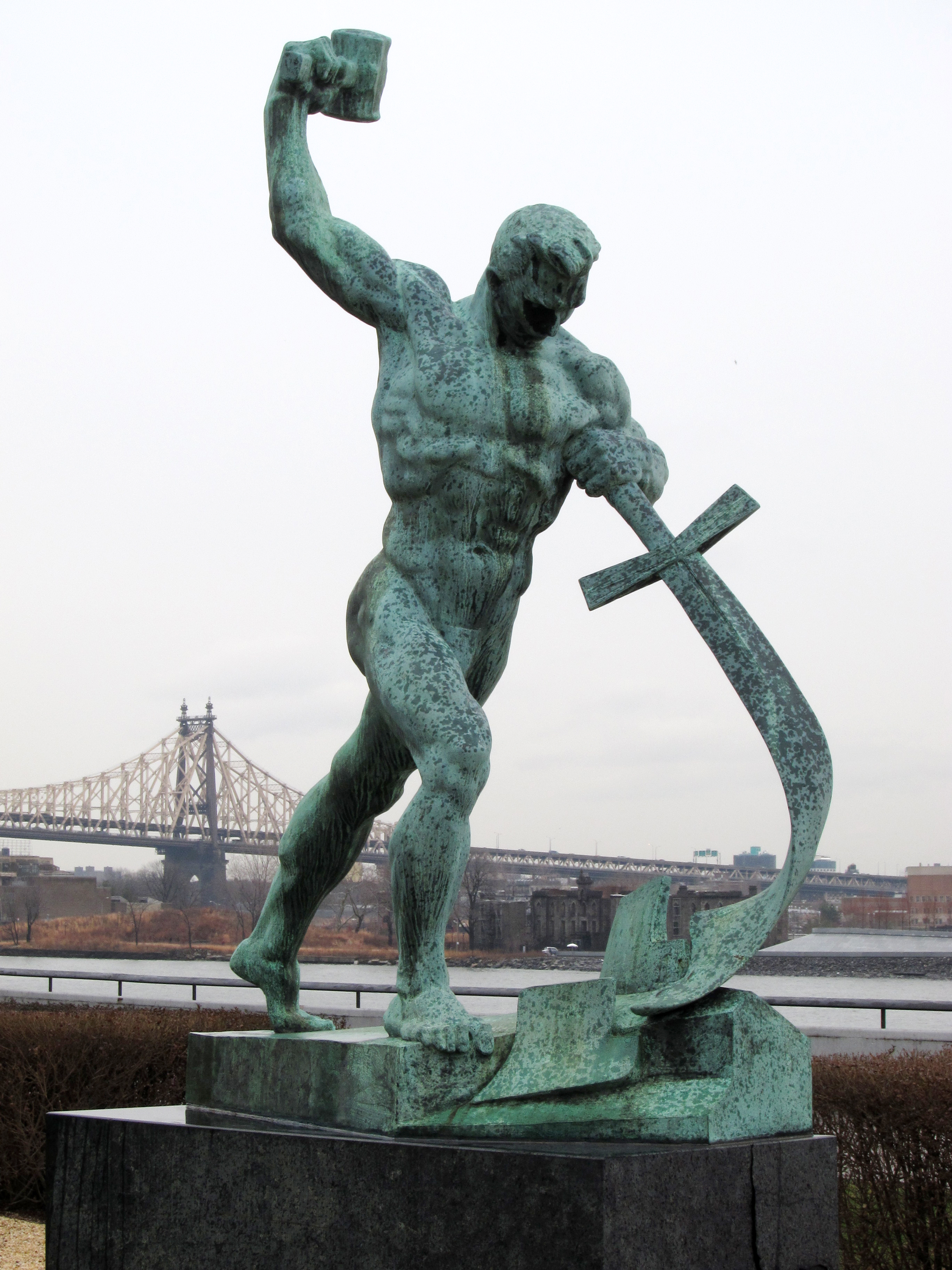
Swords into Plowshares. Sculpture by Jewgeni Wiktorowitsch Wutschetitsch – presented by the Soviet Union to the UN in 1959 – in the garden of the United Nations headquarters in New York City, photo: Neptuul, Wikipedia, Lizenz CC BY-SA 3.0: https://creativecommons.org/licenses/by-sa/3.0/deed.de
Studying dissenters provides a deeper understanding of the limited scope for action and behavior of individuals and groups under a dictatorship, as both reactions to and interactions with the ruling powers. Knowledge of these structures and mechanisms forms the basis for investigating other important aspects and topics, such as the composition of different groups, their ideological connections and networks, as well as their varying perceptions by the state, the Ministry for State Security, and the public—both inside and outside the GDR.
Using the example of the so-called “construction soldiers” (Bausoldaten), who refused armed service in the National People’s Army (NVA) and were deployed during their compulsory service without weapons but, among other tasks, to build military installations, the project explored key scientific questions: What impact did the restrictive, sometimes draconian measures imposed by the SED leadership on this group of dissenters have on their subsequent life paths? Did this pressure lead to conformity, continued refusal, or political opposition against the regime?
Building on the digital research environment WOKDDR (Widerstand, Opposition und Kirche in der DDR = Resistance, Opposition, and Church in the GDR), the project also investigated which potentially oppositional networks emerged from the shared service of these conscientious objectors. In doing so, the project not only explored a central aspect of GDR history but also advanced the existing Digital Humanities infrastructure and lays the foundation for a larger, externally funded research initiative.
Cooperation partners
Prof. Dr. Alexander Deeg [Universität Leipzig]
Landesbischöfin i. R. Ilse Junkermann [Universität Leipzig]
Running time
1 July 2024 until 31 December 2025

This project is co-financed by tax revenue based on the budget approved by the Saxon State Parliament.
Contact details
Sächsische Akademie der Wissenschaften zu Leipzig
Dimitroffstraße 26, 04107 Leipzig
Tel.: +49 341 697642-75/-76
kompetenzwerkD@saw-leipzig.de
https://kompetenzwerkd.saw-leipzig.de
Original project title
Umgang mit Andersdenkenden und die Konsequenzen: eine datenbasierte Analyse der Politik der SED gegenüber den Bausoldaten