
Original project title:
Die Deutschen Inschriften des Mittelalters und der Frühen Neuzeit
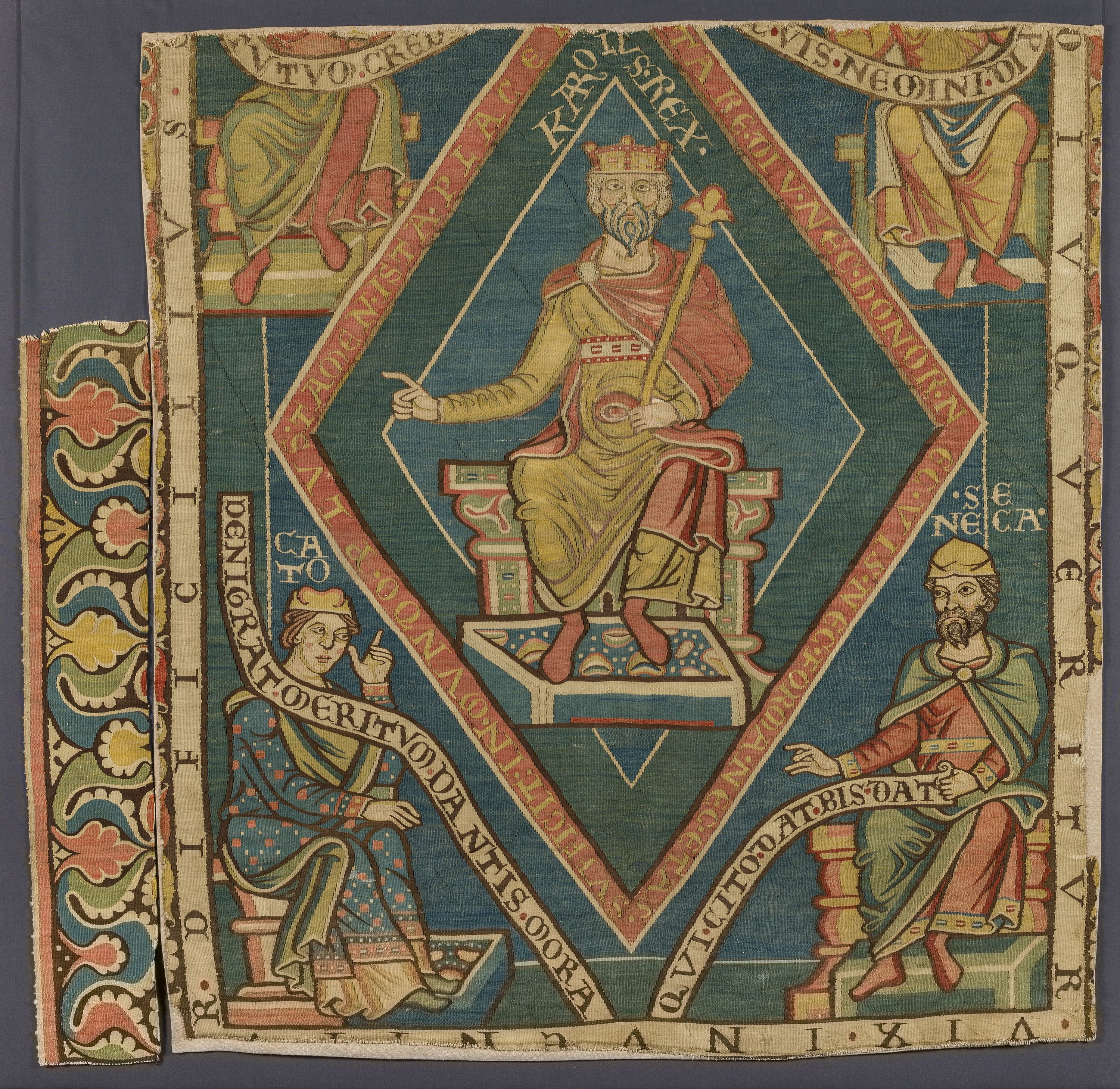
This project focuses on medieval and early modern inscriptions created before 1650, in Latin and German, from the German-speaking area. Inscriptions are significant and unique historical sources, often preserved in their original state and setting. For the premodern era, writing on stone, wood, metal, glass, textiles, or leather provides an important complement to handwritten or printed texts on parchment and paper. Most inscriptions also enjoyed a broader and longer-lasting public presence – a key factor influencing their design and production.
This applies to inscriptions on funerary monuments, church bells and buildings, as well as on church fittings such as altars, reliquaries, chalices, offertory boxes, pulpits, and baptismal fonts.
The critical, annotated editions include not only inscriptions preserved in their original form but also those now lost, known only through earlier transcriptions or photographs.
At the heart of the edition is a letter-by-letter transcription of the often hard-to-read originals, supplemented by a description of the inscribed object – many of which are of considerable art-historical significance. To provide a comprehensive picture, details of the inscription’s original location and context are also included.
Together, these data contribute to a broad understanding of text and object across time and space. All Latin, Greek, and earlier German texts are translated, and a range of historical, linguistic, and material aspects are discussed.
Another essential aim of the project, in addition to the presentation of epigraphic texts, is to provide material for a palaeography of inscriptions. The study of individual letterforms helps date undated objects and trace workshop networks.
Since 2012, the project has been operating with a revised concept for Germany.
Its goal is to make this cultural heritage accessible by establishing corpora that serve as representative case studies for broader themes in cultural history – such as imperial cities, princely residences, or monastic landscapes.
The printed volumes of the series Die Deutschen Inschriften [German Inscriptions] not only provide important source material for scholars in many fields of the humanities but also appealing reading material for non-professionals interested in the history of their town or region.
Since 2009, more than 70 volumes and additional publications have been made available as open-access editions on Deutsche Inschriften Online (http://www.inschriften.net/). These digital editions are enriched with numerous images and are continuously updated with addenda and corrigenda. They follow the FAIR principles, ensuring that the data are findable, accessible, interoperable, and reusable for both human users and machines.
Project group
Contact details
Arbeitsstelle Halle
Sächsische Akademie der Wissenschaften
zu Leipzig
Die Deutschen Inschriften
Paracelsusstraße 22
06114 Halle (Saale)
Tel.: +49 345 55229-26
borchert-pickenhan@saw-leipzig.de
Arbeitsstelle Leipzig
Sächsische Akademie der Wissenschaften
zu Leipzig
Die Deutschen Inschriften
Dimitroffstraße 26
04107 Leipzig
Tel: +49 341 697642 80
E-Mail: neustadt@saw-leipzig.de
Arbeitsstelle Jena
Sächsische Akademie der Wissenschaften
zu Leipzig
Die Deutschen Inschriften
Zwätzengasse 12
07743 Jena
Tel.: 03641 9419501
E-Mail: dietmann@saw-leipzig.de
Digital resource
Open-access editions on Deutsche Inschriften Online: http://www.inschriften.net (in German)