
Original project title:
Friedrich Heinrich Jacobi: Briefwechsel. Text – Kommentar – Wörterbuch
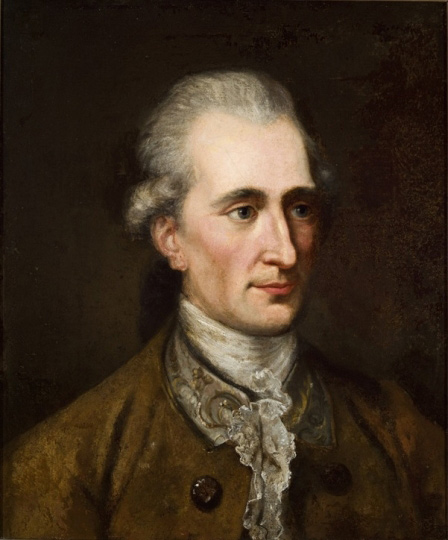
The exchange of letters between the philosopher, poet, writer and economic reformer Friedrich Heinrich Jacobi (1743–1819) has a unique significance for the understanding of the era of Classical German Philosophy – both because of its philosophical orientation, which reflects the discourse of the era in its entire breadth and diversity, and also because of the circle of pen pals. Jacobi’s correspondence reflects these personal contacts. He does not write as a “philosopher of profession” in the sense of a bourgeois profession, but as a “philosopher of profession” in the sense of a committed ‘homme de lettres’ who loves, seeks and promotes conversation – and last but not least the intensifying argument.
In his letters, he picks up on all the impulses of his time both sensitively and critically and illuminates them with a clear-sighted gaze, which remains completely unbiased by the fixation on school positions. It is precisely this sovereign and also materially favoured distance of Jacobi from the professional integration into specific political, philosophical, and literary contexts that makes his correspondence a focus of intellectual and cultural interest in the era. In the interests of the world bourgeoisie, it corresponds with those who represent the world of bourgeoisie around 1800. The high rank of this letter corpus may be illustrated by a few outstanding names in deliberately colorful order: Wieland, Goethe, Klopstock, Gleim, Heinse, Lessing, Mendelssohn, Lavater, Dohm, Garve, Princess Amalia von Gallitzin, Hemsterhuis, Hamann, Herder, Forster, Soemmerring, Johannes Müller, Matthias Claudius, the Reimarus family, Pestalozzi, Friedrich Leopold Graf zu Stolberg-Stolberg, Johann Heinrich Voß, Kant, Fichte, Reinhold, Alexander and Wilhelm von Humboldt, Schiller, Georges-Louis Le Sage, Jean François de La Harpe, Jacques Necker, Karl Friedrich Reinhard (temporary French Foreign Minister), Madame de Staël, Jean Paul, Bouterwek, Schelling, Friedrich Schlegel, and Schleiermacher.
The correspondence of the Düsseldorf years of Jacobi (1762 - September 1794) has been edited and commented on in recent years. In the project phase which is now beginning, the correspondence from two further phases of his life has to be processed. October 1974 until July 1805: After his escape from Rhineland occupied by French troops in September 1974, Jacobi finds refuge with friends in Hamburg and Holstein. Here, he intensifies his connections to native writers and academics (Carl Leonhard Reinhold, Matthias Claudius, Friedrich Leopold zu Stolberg-Stolberg, Johann Heinrich Voss); simultaneously in this period, he strongly affects the progress of the Classical German Philosophy with his writings and exchange of letters especially with Fichte, Reinhold and Jean Paul. 1799 he provides the most significant philosophical contribution to the “atheism dispute”.
August 1805 until March 1819: 1804 Jacobi becomes appointed to the Bavarian Academy of Sciences, whereby once again a new living environment reveals itself to him for a good decade. In this time, he encounters Schelling and argues out the “theism dispute” with him. Jacobi also becomes personally acquainted with Jean Paul with who he already corresponds since 1798, and it comes to a friendly encounter with Hegel resulting in Hegel’s offensive underlining of Jacobi’s importance for the formation of his thinking.
The edition “Friedrich Heinrich Jacobi: Briefwechsel” is published by the publishing house frommann-holzboog in Stuttgart-Bad Cannstatt.
Jacobi Online Dictionary
Complementing the edition of Friedrich Heinrich Jacobi’s correspondence, the “Jacobi Dictionary Online” is published in the project's indexing module . The dictionary's textual basis consists of Jacobi’s philosophical and literary writings, his entire correspondence, and his “Denkbücher” (Thinkbooks). The dictionary's articles explore both the internal interconnectedness of his work and its embedding in the central philosophical and political debates of the era. The goal is to create a working tool of systematic importance not only for Jacobi research, but for research on the period around 1800 as a whole.
The Jacobi Dictionary is freely accessible at jwo.saw-leipzig.de (in German).
Contact details
Sächsische Akademie der Wissenschaften zu Leipzig
Friedrich Heinrich Jacobi: Briefwechsel. Text – Kommentar – Wörterbuch Online
Karl-Tauchnitz-Str. 1
04107 Leipzig
Tel.: 01525 2425248
oliver.koch@saw-leipzig.de
Wörterbuch online: jwo.saw-leipzig.de
Digital resource
Online dictionary: jwo.saw-leipzig.de